




Parallel Port Loopback Test in Linux
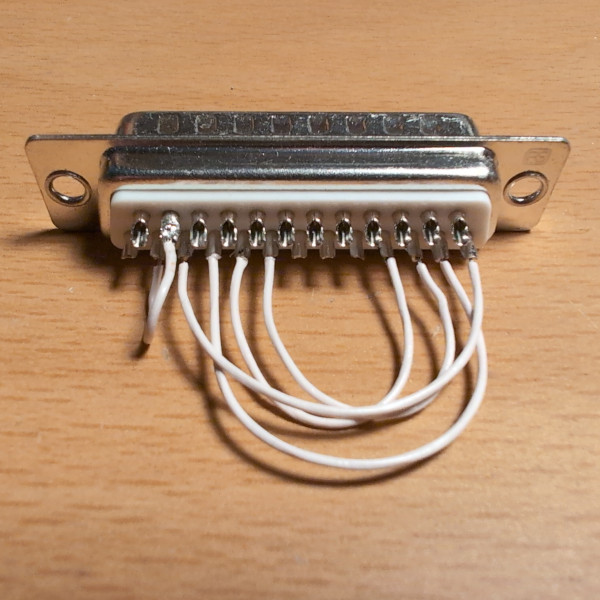
I had trouble with a PCI express parallel port card in a modern Linux box not behaving as it should, so I decided to make a test setup. It is based on loopbacking 5 data output signals to 5 status input signals, which is the same as was done in some older DOS software.
Loopback on the parallel port plug follows the PassMark standard:
|-----------|---------|---------|
| Signal    | Out Pin | In Pin  |
|-----------|---------|---------|
| Error     | 2       | 15      |
| Select    | 3       | 13      |
| Paper Out | 4       | 12      |
| Ack Sync  | 5       | 10      |
| Busy      | 6       | 11      |
|-----------|---------|---------|
Here is a photo of a finished plug:
Here is the program written in C for Linux, which uses the more modern "ppdev" API instead of just writing to I/O ports directly:
#include <errno.h>
#include <fcntl.h>
#include <linux/parport.h>
#include <linux/ppdev.h>
#include <stdbool.h>
#include <stdio.h>
#include <stdlib.h>
#include <string.h>
#include <sys/ioctl.h>
#include <unistd.h>

#define DEFAULT_DEVICE "/dev/parport0"


static unsigned char get_status_pins(int fd)
{
  unsigned char data;

  if (ioctl(fd, PPRSTATUS, &data) == -1) {
    fprintf(stderr, "ioctl(PPRSTATUS) failed: %s\n", strerror(errno));
    close(fd);
    exit(EXIT_FAILURE);
  }

  return data;
}


static void set_data_pins(int fd, unsigned char data)
{
  if (ioctl(fd, PPWDATA, &data) == -1) {
    fprintf(stderr, "ioctl(PPWDATA) failed: %s\n", strerror(errno));
    close(fd);
    exit(EXIT_FAILURE);
  }
}


static void print_status_pins(unsigned char data)
{
  fprintf(stdout, "ERR: %d  ", (data & PARPORT_STATUS_ERROR)    ? 1 : 0);
  fprintf(stdout, "SEL: %d  ", (data & PARPORT_STATUS_SELECT)   ? 1 : 0);
  fprintf(stdout, "PPO: %d  ", (data & PARPORT_STATUS_PAPEROUT) ? 1 : 0);
  fprintf(stdout, "ACK: %d  ", (data & PARPORT_STATUS_ACK)      ? 1 : 0);
  fprintf(stdout, "BUS: %d\n", (data & PARPORT_STATUS_BUSY)     ? 1 : 0);
}


static bool evaluate_status_pins(unsigned char data, int expected)
{
  int pin_value;
  bool error = false;

  pin_value = ((data & PARPORT_STATUS_ERROR) ? 1 : 0);
  if (pin_value != expected) {
    fprintf(stdout, "ERROR is %d, but expected %d!\n", pin_value, expected);
    error = true;
  }

  pin_value = ((data & PARPORT_STATUS_SELECT) ? 1 : 0);
  if (pin_value != expected) {
    fprintf(stdout, "SELECT is %d, but expected %d!\n", pin_value, expected);
    error = true;
  }

  pin_value = ((data & PARPORT_STATUS_PAPEROUT) ? 1 : 0);
  if (pin_value != expected) {
    fprintf(stdout, "PAPEROUT is %d, but expected %d!\n", pin_value, expected);
    error = true;
  }

  pin_value = ((data & PARPORT_STATUS_ACK) ? 1 : 0);
  if (pin_value != expected) {
    fprintf(stdout, "ACK is %d, but expected %d!\n", pin_value, expected);
    error = true;
  }

  /* NOTE: BUSY pin is inverted. */
  expected = (expected == 0) ? 1 : 0;
  pin_value = ((data & PARPORT_STATUS_BUSY) ? 1 : 0);
  if (pin_value != expected) {
    fprintf(stdout, "BUSY is %d, but expected %d!\n", pin_value, expected);
    error = true;
  }

  return error;
}


static void display_help(const char *progname)
{
  fprintf(stdout, "Usage: %s <options>\n", progname);
  fprintf(stdout, "Options:\n"
    "  -h       Display this help.\n"
    "  -v       Increase verbosity.\n"
    "  -d DEV   Use parallel port DEV instead of default.\n");
  fprintf(stdout, "Default parallel port device: %s\n", DEFAULT_DEVICE);
}


int main(int argc, char *argv[])
{
  int c;
  int fd;
  int control;
  char *device = DEFAULT_DEVICE;
  bool verbose = false;
  bool error = false;
  unsigned char data;

  while ((c = getopt(argc, argv, "hvd:")) != -1) {
      switch (c) {
    case 'h':
      display_help(argv[0]);
      return EXIT_SUCCESS;

    case 'v':
      verbose = true;
      break;

    case 'd':
      device = optarg;
      break;

    case '?':
    default:
      display_help(argv[0]);
      return EXIT_FAILURE;
    }
  }

  fd = open(device, O_RDWR);
  if (fd == -1) {
    fprintf(stderr, "open() device '%s' failed: %s\n", device, strerror(errno));
    return EXIT_FAILURE;
  }

  if (ioctl(fd, PPCLAIM) == -1) {
    fprintf(stderr, "ioctl(PPCLAIM) failed: %s\n", strerror(errno));
    close(fd);
    return EXIT_FAILURE;
  }

  control = 0; /* Forward Direction */
  if (ioctl(fd, PPDATADIR, &control) == -1) {
    fprintf(stderr, "ioctl(PPDATADIR) failed: %s\n", strerror(errno));
    close(fd);
    return EXIT_FAILURE;
  }

  if (verbose) {
    fprintf(stdout, "Using device: %s\n", device);
  }

  /* First set all pins to 0 and check. */
  if (verbose) {
    fprintf(stdout, "\nSetting all data pins to 0.\n");
  }
  set_data_pins(fd, 0);
  data = get_status_pins(fd);
  if (verbose) {
    print_status_pins(data);
  }
  error |= evaluate_status_pins(data, 0);

  /* Then set all pins to 1 and check. */
  if (verbose) {
    fprintf(stdout, "\nSetting all data pins to 1.\n");
  }
  set_data_pins(fd, 0xFF);
  data = get_status_pins(fd);
  if (verbose) {
    print_status_pins(data);
  }
  error |= evaluate_status_pins(data, 1);

  /* Finally set all pins back to 0 and check. */
  if (verbose) {
    fprintf(stdout, "\nSetting all data pins to 0.\n");
  }
  set_data_pins(fd, 0);
  data = get_status_pins(fd);
  if (verbose) {
    print_status_pins(data);
  }
  error |= evaluate_status_pins(data, 0);

  if (error) {
    fprintf(stdout, "\nTest FAILED due to errors!\n");
  } else {
    fprintf(stdout, "\nTest PASSED without errors.\n");
  }

  close(fd);
  return EXIT_SUCCESS;
}
Here is an example of the test failing:
Using device: /dev/parport0

Setting all data pins to 0.
ERR: 0  SEL: 0  PPO: 0  ACK: 0  BUS: 1

Setting all data pins to 1.
ERR: 1  SEL: 1  PPO: 1  ACK: 0  BUS: 0
ACK is 0, but expected 1!

Setting all data pins to 0.
ERR: 0  SEL: 0  PPO: 0  ACK: 0  BUS: 1

Test FAILED due to errors!
Indeed the "Ack" signal is faulty on this parallel port card...